
 Posts
Posts


A Dopey Campaign.
Society is littered with rules that are unprincipled, counter-productive and dumb - and the continued criminalisation of marijuana is one of them. Firstly, it seems a glaring and vapid inconsistency within our legal system that we deem it fit for the government to take away our right to choose what to do with our own bodies here (cos weed is heapz bad 4 u), but yet seems to have no problem with 18 year olds skulling back bottles of absinthe, losing all their money by betting on the All Blacks to win the Rugby World Cup, before selling themselves on the street for sex so they can continue to pay for their lung cancer treatment caused by a 5-pack a day cigarette addiction. And even you're someone who believes choices rot your brain (Paul D?) , and think that the answer is not give people any choice over things that are objectively bad for them (and so the government should also ban smokes, absinthe and the All Blacks), surely you must concede that people are going to find ways to do this 'bad stuff' anyway (often because it's addictive), and therefore legalisation becomes the best way to deal with the inevitable harms. Once something is legalised, the government can concede it exists, it can start to regulate it. The government ,unlike your current local supplier, has no interest in getting you addicted. It can ensure that when marijuana is legitimately sold, it can be taxed at a level which takes into account the negative externalities (social costs for non-economics kids) caused by dope. This will hopefully discourage first time pot smokers from trying the stuff, but at the very least will allow the government a pool of resources to deal with the inevitable bad stuff from marijuana use - like the self-induced brain damage or the general damage an addiction causes to finances and familial relationships. The legalisation of marijuana would be smart, responsible politics - conceding a problem exists, and determining that the best way to deal with it is not jail time for addicts (allowing them to hook up with more suppliers), but more funding to rehabilitation centres.
On the back of that rather marathon first paragraph, it should be noted that society is also littered with behaviours that are counter-productive and dumb - and the smoking of marijuana is again high up on this list. For all the protestations that 'it's fun' and 'it's not even as bad as drinking alcohol lol', its still got a truckload of harmful long-term effects, which I can't be assed going into here, because you should have taught them by a nice, well-meaning social worker while in high school. Legalisation of marijuana isn't the 'good' option, or even the 'morally principled' option. It's just the 'least bad' option for dealing with a bad, socially harmful thing that is a bane to society.
There are three types of people in society. There are those who don't smoke pot, who (rightly) think pot is bad and (wrongly) see it as being immoral, and who see the legalisation of pot as the first step on the road to Mad Max-ian anarchy. Then there are those who do smoke pot, cant see what all the fuss is about and wish the government would stop declaring them criminals for putting something in their bodies that may cause harm to them, but causes no harm to others. Then is a tiny minority of people like me, who don't smoke pot (on the grounds that my diet of pie sandwiches and cheap wine already has me hurtling towards an early grave without any additional help, thank you very much), but who think it should be legalised on the grounds of personal choice and/or 'its the best way to deal with the problem'. The problem is that while the first type of person is armed with a whole bunch of arguments that are rubbish and irrational (FACT: At a town hall meeting I attended in Mangawhai once, an old lady stood up and said 'We can't legalise this drug, there will be more young people growing dreadlocks!), which stems from never having really thought the issue through...the first group of people significantly outnumber the second and third groups. So how do we make them see the light?
And thats why this post isn't really about the legalisation of marijuana at all. Rather its a bitter rant against the NORML campaign currently being run by pro-legalisation advocates. This campaign (at least as it appears to an ignorant member of the public) seems to be little more than organising events in seedy public parks for large numbers of stoners to actively flout the current law and get stoned in large numbers. It's baffling, and a testament to the wear-and-tear continued marijuana usage has on the mental faculties, that the organisers think it will win over the hearts and minds of the Reefer Grinches. All these 'J Day protests' (as they have been coined) acheive is to alert the anti-marijuana lobby to their 2 biggest fears that arise from legalisation - that it normalises and makes 'fun' a substance with harmful effects, and that its 'normalisation' in society will get more people addicted. The argument that 'Marijuana usage is fun' will not end the Drug Wars. An acknowledgement that marijuana is bad, but legalisation is the best way to deal with the harms. just might. The NORML campaign must really hammer the inefficiency and inadequacy of 'prohibition', while playing up the fact that legalisation does not, and should not equate to social acceptance.
This may go some way to defeating the strongest argument that can be mustered by the anti-pot lobby - that more people will become addicted. Firstly, if marijuana usage retains some sort of 'taboo' status, people will be less likely to take it up. Secondly, smart, effective regulation allows for those who are addicted to have better access to care, and also makes it harder for the industry's current heavy hitters, which relies on a business model of pushing the drug onto as many new and naive users as possible.
It's sad that the people most committed to marijuana reform are the people who are doing the most to damage its political acceptance. But that doesn't have to be the case. Once stoners acknowledge the harms of their product of choice, the case against marijuana becomes about as pathetic and pointless as Dragonball:Evolution. After all, a model of 'criminal ban - no questions asked' has been a policy disaster, both on the taxpayer who must bear the brunt of the 'war on people putting they stuff they want to put into their own bodies' and the addicts themselves. I think NORML are conducting their campaign in a boneheaded way that will ultimately fail, but overall - they sit on the right side of the argument. Its time for a change.
Alex
NOTE: Had I have been braver, I would have written this post about the legalisation of ALL drugs, not just marijauna. But I'm not entirely convinced on this - with some drugs (say P), the fact that you are more likely to lose control and cause harm to others after taking the drug seems a convincing enough reason for their continued criminalisation. But I'm really not sure, and theres convincing stuff that says that acknowledging the problem through legalisation is still a better means of harm reduction than criminalisation. Check out this article on Portugal, which has a legalise all drugs policy. My mate Will has also considered this issue on his blog. If anyone wants to argue for the legalisation of ALL drugs, I'd be happy to hear/read it.


AGuestOnFailure: How they would move -- Footnotes on the Masterworks of Ludwig Wittgenstein
Imagine that Wittgenstein's Tractatus Logico Philosophicus was a person.
He was a young man – driven, entrepreneurial and shaved clean. He woke up early in the morning without setting an alarm clock. He ate quickly, dressed quickly and opened his front door onto the hustle and bustle of a busy sidewalk.
The Tractatus was a young man who always arrived at work on time. Many of his colleagues appreciated his punctuality and always made a point of saying positive things about him. Some tried to imitate his behavior. But those who only witnessed his arrival missed something important. Those who watched the Tractatus on his journey had a better understanding of his character.
When The sidewalk was empty The Tractatus would glide over the pavement with long, elegant strides, covering much distance in little time. When the sidewalk became congested with doddlers and window shoppers his strides would shorten. They became faster and impossibly precise. He wove in and out of the crowd rhythmically; side stepping a leashed dog to the left, lifting his briefcase over the head of an old woman to the right. To some, the Tractatus was not walking at all; rather he was dancing through pedestrians to strange rhythms and beats that only he could hear.
If he was forced to endure the nuisance of waiting at a crosswalk he would observe his environment and try to bring order to his surroundings by naming its constituent parts. He saw a flock of birds in the sky: Branta canadensism, he said to himself. He saw a plucky weed bursting through a crack in the pavement: Taraxacum officinale.
When the light changed and it was his turn to walk he strode confidently into the street, leaving a group of awe-struck pedestrians in his wake.
Imagine that Wittgenstein's Philosophical Investigations was a person.
He was an old man with a bent back and a house that smelled vaguely of mildew. His house was cluttered with things he found interesting – African wood carvings, out-of-circulation currency, antique golf clubs, etc.
He always woke up slowly and stretched his tired body before going for a walk. Philosophical Investigations left his house with no specific purpose except to continue the endless task of exploring the back alleys and nooks of his city. He tried to avoid the main streets. After all, the treasures he sought were usually in the hidden shops, the types of places where old Chinese men sold mysterious curios from forgotten times.
He wandered through narrow paths, taking his time and investigating everything thoroughly. Even still it was not unusual for him to backtrack, convinced he missed something important. It never bothered him to return to places he'd been before. In fact he was always secretly excited to end up at a place that he had already been, but to have arrived there from a different direction.
He never failed to find things of interest on his walks. It was not unusual to find him looking at brick work at a crumbling building, or reading a declaration of love that had been etched into a bench with a jack-knife. He carried a magnifying glass in his coat pocket. Sometimes when he got tired he would stop at a pond to feed the Branta canadensis. Philosophical Investigations did not know that Branta canadensis was the Latin term for the birds he was feeding (he called them “Honkers”), but he had keenly observed how they were; how they existed in the world. He knew that each bird found just one partner and stayed with that partner until separation by death. He liked that. Once his strength returned, he continued on his way, shuffling towards his next discovery.
It was inevitable that the young Tractatus and the old Philosophical Investigations would cross paths. All the walkers in the city eventually bumped into one another. They approached each other on the sidewalk and between them lay a patch of glimmering ice. Philosophical Investigations recognized this as a hazard and stepped onto the dirty ground beside the pavement in order to avoid the ice.
The Tractatus thought he saw something else in the patch of ice. To the Tractatus the ice looked beautiful – perfect. Its had a smoothness and a grace that was intoxicating to the young man. He wad finally found a surface to match his style. He strode onto the ice and all his elegance could not save him. He fell and slid to the feet of the old man, who watched the whole ordeal with amusement. Philosophical Investigations extended his arm to the young man who took it. They smiled at each other. Between them was a sense that despite traveling in opposite directions, and appearing to have little in common, there was a deeper bond, an unstated understanding between them.
“Son, you can't walk on ice. You need friction, you need rough ground,” the old man said.
“Sorry, no time to chat,” the young man said. “I've got places to be.”
The Tractatus took off, walking even faster than he had been before (presumably to make up for lost time). Philosophical Investigations chuckled to himself, and then bent down to investigate a dandelion.
Peter Jickling
July 16, 2008
He was a young man – driven, entrepreneurial and shaved clean. He woke up early in the morning without setting an alarm clock. He ate quickly, dressed quickly and opened his front door onto the hustle and bustle of a busy sidewalk.
The Tractatus was a young man who always arrived at work on time. Many of his colleagues appreciated his punctuality and always made a point of saying positive things about him. Some tried to imitate his behavior. But those who only witnessed his arrival missed something important. Those who watched the Tractatus on his journey had a better understanding of his character.
When The sidewalk was empty The Tractatus would glide over the pavement with long, elegant strides, covering much distance in little time. When the sidewalk became congested with doddlers and window shoppers his strides would shorten. They became faster and impossibly precise. He wove in and out of the crowd rhythmically; side stepping a leashed dog to the left, lifting his briefcase over the head of an old woman to the right. To some, the Tractatus was not walking at all; rather he was dancing through pedestrians to strange rhythms and beats that only he could hear.
If he was forced to endure the nuisance of waiting at a crosswalk he would observe his environment and try to bring order to his surroundings by naming its constituent parts. He saw a flock of birds in the sky: Branta canadensism, he said to himself. He saw a plucky weed bursting through a crack in the pavement: Taraxacum officinale.
When the light changed and it was his turn to walk he strode confidently into the street, leaving a group of awe-struck pedestrians in his wake.
Imagine that Wittgenstein's Philosophical Investigations was a person.
He was an old man with a bent back and a house that smelled vaguely of mildew. His house was cluttered with things he found interesting – African wood carvings, out-of-circulation currency, antique golf clubs, etc.
He always woke up slowly and stretched his tired body before going for a walk. Philosophical Investigations left his house with no specific purpose except to continue the endless task of exploring the back alleys and nooks of his city. He tried to avoid the main streets. After all, the treasures he sought were usually in the hidden shops, the types of places where old Chinese men sold mysterious curios from forgotten times.
He wandered through narrow paths, taking his time and investigating everything thoroughly. Even still it was not unusual for him to backtrack, convinced he missed something important. It never bothered him to return to places he'd been before. In fact he was always secretly excited to end up at a place that he had already been, but to have arrived there from a different direction.
He never failed to find things of interest on his walks. It was not unusual to find him looking at brick work at a crumbling building, or reading a declaration of love that had been etched into a bench with a jack-knife. He carried a magnifying glass in his coat pocket. Sometimes when he got tired he would stop at a pond to feed the Branta canadensis. Philosophical Investigations did not know that Branta canadensis was the Latin term for the birds he was feeding (he called them “Honkers”), but he had keenly observed how they were; how they existed in the world. He knew that each bird found just one partner and stayed with that partner until separation by death. He liked that. Once his strength returned, he continued on his way, shuffling towards his next discovery.
It was inevitable that the young Tractatus and the old Philosophical Investigations would cross paths. All the walkers in the city eventually bumped into one another. They approached each other on the sidewalk and between them lay a patch of glimmering ice. Philosophical Investigations recognized this as a hazard and stepped onto the dirty ground beside the pavement in order to avoid the ice.
The Tractatus thought he saw something else in the patch of ice. To the Tractatus the ice looked beautiful – perfect. Its had a smoothness and a grace that was intoxicating to the young man. He wad finally found a surface to match his style. He strode onto the ice and all his elegance could not save him. He fell and slid to the feet of the old man, who watched the whole ordeal with amusement. Philosophical Investigations extended his arm to the young man who took it. They smiled at each other. Between them was a sense that despite traveling in opposite directions, and appearing to have little in common, there was a deeper bond, an unstated understanding between them.
“Son, you can't walk on ice. You need friction, you need rough ground,” the old man said.
“Sorry, no time to chat,” the young man said. “I've got places to be.”
The Tractatus took off, walking even faster than he had been before (presumably to make up for lost time). Philosophical Investigations chuckled to himself, and then bent down to investigate a dandelion.
Peter Jickling
July 16, 2008
As (once) demanded - A word on Kittens and Sandwiches.
Gah, I had abandoned this blog for a while. A combination of uni life and trying to join the workforce meant there was no time for the internet to recieve the sad, poorly reasoned opinions of a sad, reasonably poor man. And now I have to take part in Paul's muppetsurvey09 and give my opinions on kittens and sandwiches, 2 wholly unrelated things, neither of which I care about. I hate the democratic process. Oh well, here lieth a perfunctory post on Kitten Sandwiches, and I should be back to my normal blogging shortly....
I've posted before on kittens. Or more to the point, why I like kittens and will not eat them, but why I will still be your friend if you decided to eat one. Or, for that fact, if you decide to eat a whale. But I think I would struggle to remain your friend if you decided to get a puppy. Puppies are stupid. They eat shoes, knock over valuable household objects, demand that you take time out of your day to take them for walks, and they are unable to control their bowels. Worse, they grow up into dogs, which are just like puppies only they are not even slightly cute, and may without warning maul the mailman. Or your small cousin. I like dogs in the limited capacity of 'working dogs' - they are an acceptable, if unreliable tool to enhance human labour in the fields of agriculture, security or blind people. But not as pets. They are terrible pets. The only people who keep dogs as pets are control freaks who yearn to return to the days when their children were helpless and needed them to cater to their every whim, or patched gang members. Cats, the grown-up version of kittens, are much better pets - almost entirely self-reliant, and just checking up on you every now and then for a friendly scratch, or to keep you warm by sleeping at the foot of your bed at night. People who own cats are smart, urban,professionals - busy people who want a low-maintenance but comforting pet.
I'm not going to de-friend you on Facebook if I found out you own a dog, but I would think less of you, and say mean things about you behind your back. Owning a dog is, in my opinion, an epic fail character flaw. And you would think I was a jerk, and acting completely unfairly. BUT, if I went one step further - and refused to hire you as an employee at my textile factory because I didn't like the fact you owned a dog, then you would claim I was being unfairly discriminatory. After all, owning a dog bears no relevance to your ability to sew, and be a good maker of textiles, does it?
Now, lets suppose I like sandwiches - which I do. Lets say, hypothetically, after a trip to the the sunny shores of Gisborne, I developed a liking for 'Pie Sandwiches' - a mince and cheese pie between two slices of bread. You may think this weird, a risk to my arteries, evidence of a broken man's retreat into depravity, whatever. I would understand. In fact I realise that my esteemed co-blogger, Paul D, a man who has blogged ad nausem on the issue of fine dining as evidence of a higher being, think pie sandwiches are epic fail. I appreciate this policy difference, and am pleased our friendship has prospered regardless. I am also pleased that Paul D did not refuse to start this co-blog with me, on account of my partiality to pie sandwiches. After all, what foods I find delicious has no bearing on my ability to write concise, witty posts on popular and current issues.
Whats the point of all this? Well, obviously theres a range of things in modern society that require us to choose the best person based on a range of objective criteria - say for instance, a job. And all people would freely agree that some criteria are really relevant for people looking to apply for a job - like your skill level at that particular job, your ability to be available at the required times, your work ethic, whether or not you are punctual etc. And there are some things that you cannot BY LAW, and by any conception of popular morality, take into consideration when deciding who to employ - like race, gender, sexuality, political orientation, age etc. Then there are things that everyone would consider to be ridiculous things to add to a criteria - such as what pets you own, or how you choose to eat your pies.
But theres a fourth category of things. Things that have no bearing on a persons ability to do a job, but which get taken into consideration as relevant, because its socially normal to find them yucky. This post isn't about kitten sandwiches, its about smoking. I think smoking is gross. But it is legal. And whether or not you smoke has no bearing on your ability to drive a forklift, or your knowledge of tax law, or your ability to be President of the United States. And yet, we would find it perfectly acceptable if someone was denied a job because they smoked. We would some way, say it was indicative of a seedy and unsavoury aspect of someone's character, and that it was perfectly justified to not want to hire them. But its wrong.
Our generation likes to think that we are less bigoted than our parents. That's wrong. We are bigoted, just about different things. Just as our grandparents generation thought it ok to discriminate on the basis of race, and our parents on the basis of sexuality, we consider it ok to discriminate on the basis of people making choices we don't like. That's wrong.
I hope I made some kind of point here. I'm not sure if I have, beyond proving that these poll thingy's are ridiculous. I've managed to wank on for about a thousand words on this stupid topic. And given that a picture says a thousand words...maybe I shall leave you with one that, I think sums up my views on kittens and sandwiches quite nicely, thank you very much.
 He still smokes. Lol.
Alex
I've posted before on kittens. Or more to the point, why I like kittens and will not eat them, but why I will still be your friend if you decided to eat one. Or, for that fact, if you decide to eat a whale. But I think I would struggle to remain your friend if you decided to get a puppy. Puppies are stupid. They eat shoes, knock over valuable household objects, demand that you take time out of your day to take them for walks, and they are unable to control their bowels. Worse, they grow up into dogs, which are just like puppies only they are not even slightly cute, and may without warning maul the mailman. Or your small cousin. I like dogs in the limited capacity of 'working dogs' - they are an acceptable, if unreliable tool to enhance human labour in the fields of agriculture, security or blind people. But not as pets. They are terrible pets. The only people who keep dogs as pets are control freaks who yearn to return to the days when their children were helpless and needed them to cater to their every whim, or patched gang members. Cats, the grown-up version of kittens, are much better pets - almost entirely self-reliant, and just checking up on you every now and then for a friendly scratch, or to keep you warm by sleeping at the foot of your bed at night. People who own cats are smart, urban,professionals - busy people who want a low-maintenance but comforting pet.
I'm not going to de-friend you on Facebook if I found out you own a dog, but I would think less of you, and say mean things about you behind your back. Owning a dog is, in my opinion, an epic fail character flaw. And you would think I was a jerk, and acting completely unfairly. BUT, if I went one step further - and refused to hire you as an employee at my textile factory because I didn't like the fact you owned a dog, then you would claim I was being unfairly discriminatory. After all, owning a dog bears no relevance to your ability to sew, and be a good maker of textiles, does it?
Now, lets suppose I like sandwiches - which I do. Lets say, hypothetically, after a trip to the the sunny shores of Gisborne, I developed a liking for 'Pie Sandwiches' - a mince and cheese pie between two slices of bread. You may think this weird, a risk to my arteries, evidence of a broken man's retreat into depravity, whatever. I would understand. In fact I realise that my esteemed co-blogger, Paul D, a man who has blogged ad nausem on the issue of fine dining as evidence of a higher being, think pie sandwiches are epic fail. I appreciate this policy difference, and am pleased our friendship has prospered regardless. I am also pleased that Paul D did not refuse to start this co-blog with me, on account of my partiality to pie sandwiches. After all, what foods I find delicious has no bearing on my ability to write concise, witty posts on popular and current issues.
Whats the point of all this? Well, obviously theres a range of things in modern society that require us to choose the best person based on a range of objective criteria - say for instance, a job. And all people would freely agree that some criteria are really relevant for people looking to apply for a job - like your skill level at that particular job, your ability to be available at the required times, your work ethic, whether or not you are punctual etc. And there are some things that you cannot BY LAW, and by any conception of popular morality, take into consideration when deciding who to employ - like race, gender, sexuality, political orientation, age etc. Then there are things that everyone would consider to be ridiculous things to add to a criteria - such as what pets you own, or how you choose to eat your pies.
But theres a fourth category of things. Things that have no bearing on a persons ability to do a job, but which get taken into consideration as relevant, because its socially normal to find them yucky. This post isn't about kitten sandwiches, its about smoking. I think smoking is gross. But it is legal. And whether or not you smoke has no bearing on your ability to drive a forklift, or your knowledge of tax law, or your ability to be President of the United States. And yet, we would find it perfectly acceptable if someone was denied a job because they smoked. We would some way, say it was indicative of a seedy and unsavoury aspect of someone's character, and that it was perfectly justified to not want to hire them. But its wrong.
Our generation likes to think that we are less bigoted than our parents. That's wrong. We are bigoted, just about different things. Just as our grandparents generation thought it ok to discriminate on the basis of race, and our parents on the basis of sexuality, we consider it ok to discriminate on the basis of people making choices we don't like. That's wrong.
I hope I made some kind of point here. I'm not sure if I have, beyond proving that these poll thingy's are ridiculous. I've managed to wank on for about a thousand words on this stupid topic. And given that a picture says a thousand words...maybe I shall leave you with one that, I think sums up my views on kittens and sandwiches quite nicely, thank you very much.
 He still smokes. Lol.
Alex
Killing in the Name... of Money
“The best soldiers are not warlike” (Chinese Proverb)
Mercenaries have been around, in one form or another, for ages.
But getting at what, exactly, a mercenary is and how it's different than your typical legitimate soldier turns out to be tricky. Our intuitions might drive you to say that a mercenary is anyone who wages or participates in war primarily for the remuneration she'll receive for that service. But that definition won't work. It won't work because we can think of someone we'd want to call a mercenary who factors in ideologies when deciding who to work for (for instance, no matter how much you might get paid, you might not be willing to work as a mercenary for someone fighting your own country). And, it could also be the case that someone working as a traditional soldier in a legitimate army is only doing so because of the pay; after all, military service is very often boasted as a career opportunity. So the idea of what a mercenary is can't be based on being paid for military services.
So I'm not sure we can get a completely clear and unproblematic conception of what a mercenary is. Nevertheless I think we can work with the idea that a mercenary is someone who looks out for herself, or her interests, while working outside the legitimate traditional institutions of soldiering (even if that involves working for a legitimate traditional institution of soldiering). I realize there's vagueness in that, but I think it's – coupled with the intuitions backing up the initial attempted definition in the preceding paragraph – clear enough to work with for now.
While you might think that mercenaries are only common is poor lil undeveloped countries, war-torn regions, or your mom's bedroom, they're really all over. Recently, and by that I mean in the last few decades, a new form of mercenarism has develop: the private military industry. These kinds of mercenaries are everywhere, but they're typically based in wealthy developed nations. This industry isn't the same as the military industrial complex (which is the business of making arms for the military). Rather, the private military industry is the business of providing “security services"; The private military industry is the business sector comprised of firms whose primary purpose is to offer services (in one form or another) of the variety of what legitimate state militaries traditionally (or theoretically could) provide. So this includes everything from highly trained combat personnel to logistical support. At the end of the day these firms are the modern variant of mercenarism; they offer the same kinds of services offered by “traditional” mercenaries, but they do so via a contemporary international business model; they are corporatized mercenaries. However, while you distill it, this difference doesn't amount to much of a difference at all: we can't meaningfully (or, at least, morally) distinguish them from other kinds of mercenaries in virtue of the fact that those working for a private military industry firm collect themselves under a corporate banner.
Now, having said all that, what's the problem? I mean, sure, most people seem to have the intuition that there is something morally repugnant when it comes to mercenaries: that waging war through mercenaries is, in some way, the wrong way to wage in war; or that the reasons someone might be motivated to act as a mercenary are the wrong reasons to participate in war. But are our intuitions here right? Even if we assume some sort of Just War Theory doctrine, our intuitions about mercenaries still seem indefensible. For instance mercenarism can't be bad because mercenaries do it for the money since soldiers in the regular army could, just the same, do it for nothing but money (and we don't want to say they're on the same moral standing as mercenaries). Nor can we say that mercenarism is bad because mercenaries are necessarily looking out for themselves; a mercenary could be just as motivated by a legitimate cause as a freedom fighter or patriotic soldier. And the fact that they operate outside legitimate traditional institutions of soldiering seems irrelevant as well – we want to say that freedom fighters, civil war fighters, and the like aren't also necessarily immoral because they, like mercenaries, are outside legitimate traditional institutions of soldiering. So what's the unique problem with mercenaries?
Well, in the end I'm not sure there is one. But if there is one, it might be grounded in how we conceptualize mercenaries - that is, that which makes them unique from other kinds of partciapants in war might be the same grounds for why they're morally repugnant. So, if there is any case against mercenarism, that might be where we need to look (or at least start). In the end, though, I'm not sure how fruitful that would be. In the end, our intuitions here might just be wrong. It could be the case that, most often, mercenaries are motivated by the wrong reasons. Yet that's not enough to say mercenarism is necessarily immoral and never okay. I could say more, but I think that’s enough for now. This is just my spur-of-the-moment thoughts on the subject. I could be wrong. After all, what do I know.
An Ode to the World's Greatest Man
“Writing takes time and thought that blogging doesn't allow.” (P.J. O'Rourke)
Today I'm not going to argue in favor of something ridiculous; nor am I gonna point out another thing hippies are doing wrong. Instead I'm going to preach the gospel and praise the greatest man who ever lived. No, I ain't talking about Jesus... I'm talkin' about P.J. O'Rourke.
P.J.'s an interesting guy: when he was in uni he was probably just about as far to the left as someone could be – he was a Maoist. But, over the years, he swung like a pendulum to the far right. What I think is important here is that he remained a cool and interesting guy all along. As he once called himself, he's a “republican party reptile” - someone who, while a staunch conservative, still loves the finer things in life: vices and an absence of stupid people.
The fact that P.J. is, essentially, a senior citizen these days is irrelevant... I'm not going to claim that he's writing is interesting cuz he “lived an interesting life yo”. There's a lot of people who've had interesting lives and written books about 'em. So I think it'd be uninteresting were my reasons for why you should read some P.J. so lame. But even though he has lived an interesting life his writing is interesting because he's such a good writer. I mean, sure, he's written articles detailing the phenomenology of taking ecstasy; what's like to be given a Ferrari and told to drive it from New York to Los Angeles with your boss in the seat beside you; and "How to Drive Fast on Drugs While Getting Your Wing-Wang Squeezed and Not Spill Your Drink". Even if you aren't motivated to experiment with drugs or speed from coast to coast, he write in such a way that it makes you interested - he's able to make it funny while highlighting the parts you secretly want to ask about.
It's important, though, to emphasis an division in his writings; between: his “gonzo journalism”, and important/abstract type things. The important/abstract type stuff he's written about includes the U.S. System of government, economics, war, and the world of business. These, I think, are all important topics and everyone should get some familiarity with them. And P.J. - in virtue of his cleaver writing prose - is, I think, able to make otherwise dry and dreary topics fascinating and fun for the whole family. Here you'll find him, characteristically, addressing serious issues in his trademark comical style; after all he is a satirist (for those undergraduate students out there, think the style of Jon Stewart and Stephen Colbert). His range as a write can be highlighted by pointing out that he's written a book explaining Adam Smith's convoluted The Wealth of Nations, and had articles (which I, personally, find to be better than his books) published in everything from Playboy to Rolling Stone.
While I think P.J. is just your everyman (that is, the non-idiot cool uncle - who drank too much and did cool shit - you looked up to as an adolescent). I could be wrong. Really, while I've tried to paint an accurate picture of my hero and why your life would be notably better were you to read some of his shit, I'm not sure if I've managed to pull that off. Sadly, I've never met P.J. and I probably never will. Nor will he ever read and give me feedback in a witty lil comment since he's against blogging. (In fact, he doesn't even have a computer; he still sticks with his good ol' typewriter... which I guess just gives him “character”.) So what's I've said here could be off the mark. Nevertheless, the only way you'll really be able to find out if my assesment of him and his work is right is to pick up one of his books. I could say more, but I think that’s enough for now. This is just my spur-of-the-moment thoughts on the subject. I could be wrong. After all, what do I know.
You wouldn't eat a Negro.
Given current market trends in New Zealand, I have a delicious product I am planning to promote and market through the hallowed pages of AWordOnFailure. This product will be a tasty confectionary treat, and I shall call it 'the Negro'. It will be shaped like a small thick-set man, and will be coloured entirely black, except for the lips - which shall be red. And thick. All of these delicious candy treats will come in only one flavour - WATERMELON. I have not yet decided on a slogan to market this entrepreneurial wet-dream of mine. At first I thought 'For a fun family time, you just can't beat a Negro' would be an assured success. But now I am more convinced by the merits of the slogan 'Become a slave to the taste!'. I am not entirely convinced by either, maybe I shall run a poll.
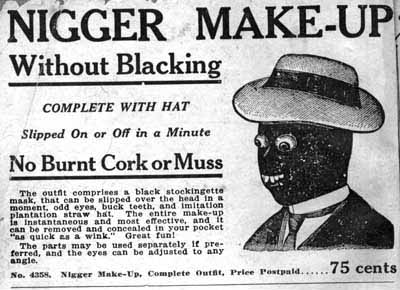
Obviously, I don't intend to do this - and I apologise profusely to anyone who may have been offended by the disgraceful racial slurs in the previous paragraph. It's interesting though, that once upon a time, it would have been socially acceptable to say that. Just as it was socially acceptable to sell this. Hell, I remember when a game of Eeny-Meeny-Miney-Mo, included the lyrics, 'Catch a nigger by the toe, if he squeals let him go...'. New Zealanders, in general, would probably like to think that in 2009, we are more enlightened than this. Well, we....aren't. In fact, there has lately been a huge public outcry over New Zealander's right to 'cherish' and 'treasure' an undeniably racist candy.
I'm referring, of course, to the Eskimo - a coloured and flavoured marshmellow bundle of deliciousness moulded into the shape of how candy-makers in the 1800's thought 'native wot lived in da cold' should look like. Read about it here, then read NZ's epic culturalrelations fail response here. In summary - Recently, an Inuit tourist to New Zealand, Seeka La VeeVee Parsons, raised the issue that the word Eskimo was no longer appropriate to describe her people, and - (it means 'eaters of raw meat') - and was now considered an offensive term in Canada and Greenland. Secondly, the shape of the candy, as a small little man in a snow suit with slitty eyes was an offensive depiction of her culture. Fair enough, I thought - while I've grown up with Eskimos and I find them delicious and had never really considered whether or not they were offensive, in hindsight, they are. Eskimos are my generation's 'golliwogs' - something that collective ignorance meant we never realised was offensive at the time , but in hindsight we will cringe that we ever found it acceptable. I thought that we should be thanking Ms. Parsons before we embarrassed our selves as a country further, and undermined our proud record on indigenous rights.
But if you take the response of the mainstream morons that have offered their comment on this issue on such auguste forums as stuff.co.nz - and more sadly, the manufacturers of the lollies themselves (Pascalls), one would imagine that Ms. Parsons urinated on the NZ flag, declared Phar Lap to be 'an Australian nag' before hitting Bronagh Key in the face with a signed picture of the crew of Alinghi. Ms Parsons has been told by the internet to 'grow up or go home' while Pascalls insists their will be no change to the design or name - and trusts that the New Zealand public will continue to enjoy Eskimos. Sigh. A number of arguments are offered in defence of the Eskimo. All suck.
The first is that 'the majority of people don't find Eskimos offensive'. True....because most people are not Inuit. A 'majority of people' have at one time or another supported slavery, a ban on homosexuality, no votes for women....the fact that a certain group of people find it offensive, and offer good, solid evidence as to why it is offensive to them should be enough to satisfy us.
The second argument is 'But we have been selling them for 64 years - it's a traditional part of the New Zealand culture!'. True, but I fail to see how this is an argument in support of the Eskimo. Just because an offensive thing has been around for ages - it doesn't follow from that that thing suddenly gains legitimacy and respect because of it's age. Take a ban on homosexuality. This was the norm for thousands of years, but that didn't make it right. It's hard for a society to admit the fact that we've been fucking up, and doing it wrong - but this doesn't mean we should keep acting in a way that is wrong or offensive, simply because its the way we have always done it, when there are no good arguments for the continuation of that practice.
Thirdly, the idea that 'We didn't know it was offensive, so that makes it ok.' I used golliwoggs earlier as an example of something that used to be socially acceptable, but now its frankly embarassing to admit that our parents had one as a toy when they were kids. (although Mr. Golly was my favourite character on Noddy, so maybe I shouldn't be so quick to call the kettle, er,black.) The fact that we, as a society, have no been made aware that Eskimos are considered offensive should mean that whatever we thought in the past is irrelevant. I mean, if I told you a 'Your Mom' joke, and you told me your mom was dead - well, I'd feel awful and I would apologise for bringing it up, but I meant no harm. But if I laughed and told another 'Your Mom' joke (cos dey heapz funni lol), well...I'd be a jerk.
Finally, there are people that concede that they are offensive, but defend Eskimos on the ground that they are delicious, which apparently transcends the shape, name,etc. These arguments are the worst. Being delicious, has never, is not, and will never be a defence to bigotry. I admit they are tasty, but I would get that delicious taste even if they were shaped as indescribable blobs. You could mould in the shape of Helen Clark's breasts and the taste would still be the same. In fact, they would be even tastier, as no Inuit would have been harmed in the enjoyment of my candy.
I'm advocating a ban on all Pascalls products until the Eskimo is pulled from the shelves of all supermarkets. But knowing the sad readership of my blog, that just means that I won't be eating lollies for long, long, long time. But some things are worth taking a stand on. The whole Western world is littered with outdated and offensive relics from an ignorant past, that present a demeaning charicature of indigenous peoples. Eskimos are just one example. Chief Wahoo, the Cleveland Indians mascot is another. And theres countless others here. If I was really principled, and really concerned - then I'd also have a problem with a certain provincial rugby team (located in a province that rhymes with Wankerbury) which is named after a series of bloody acts of agression, justified on the basis of religious intolerance, that resulted in the deaths of over 2 million innocent civilians, many in the Muslim world. But fuck it, that's a battle for my children's generation to fight.
Alex
my next post will be on kittens and sandwiches. promise.
Obviously, I don't intend to do this - and I apologise profusely to anyone who may have been offended by the disgraceful racial slurs in the previous paragraph. It's interesting though, that once upon a time, it would have been socially acceptable to say that. Just as it was socially acceptable to sell this. Hell, I remember when a game of Eeny-Meeny-Miney-Mo, included the lyrics, 'Catch a nigger by the toe, if he squeals let him go...'. New Zealanders, in general, would probably like to think that in 2009, we are more enlightened than this. Well, we....aren't. In fact, there has lately been a huge public outcry over New Zealander's right to 'cherish' and 'treasure' an undeniably racist candy.
I'm referring, of course, to the Eskimo - a coloured and flavoured marshmellow bundle of deliciousness moulded into the shape of how candy-makers in the 1800's thought 'native wot lived in da cold' should look like. Read about it here, then read NZ's epic culturalrelations fail response here. In summary - Recently, an Inuit tourist to New Zealand, Seeka La VeeVee Parsons, raised the issue that the word Eskimo was no longer appropriate to describe her people, and - (it means 'eaters of raw meat') - and was now considered an offensive term in Canada and Greenland. Secondly, the shape of the candy, as a small little man in a snow suit with slitty eyes was an offensive depiction of her culture. Fair enough, I thought - while I've grown up with Eskimos and I find them delicious and had never really considered whether or not they were offensive, in hindsight, they are. Eskimos are my generation's 'golliwogs' - something that collective ignorance meant we never realised was offensive at the time , but in hindsight we will cringe that we ever found it acceptable. I thought that we should be thanking Ms. Parsons before we embarrassed our selves as a country further, and undermined our proud record on indigenous rights.
But if you take the response of the mainstream morons that have offered their comment on this issue on such auguste forums as stuff.co.nz - and more sadly, the manufacturers of the lollies themselves (Pascalls), one would imagine that Ms. Parsons urinated on the NZ flag, declared Phar Lap to be 'an Australian nag' before hitting Bronagh Key in the face with a signed picture of the crew of Alinghi. Ms Parsons has been told by the internet to 'grow up or go home' while Pascalls insists their will be no change to the design or name - and trusts that the New Zealand public will continue to enjoy Eskimos. Sigh. A number of arguments are offered in defence of the Eskimo. All suck.
The first is that 'the majority of people don't find Eskimos offensive'. True....because most people are not Inuit. A 'majority of people' have at one time or another supported slavery, a ban on homosexuality, no votes for women....the fact that a certain group of people find it offensive, and offer good, solid evidence as to why it is offensive to them should be enough to satisfy us.
The second argument is 'But we have been selling them for 64 years - it's a traditional part of the New Zealand culture!'. True, but I fail to see how this is an argument in support of the Eskimo. Just because an offensive thing has been around for ages - it doesn't follow from that that thing suddenly gains legitimacy and respect because of it's age. Take a ban on homosexuality. This was the norm for thousands of years, but that didn't make it right. It's hard for a society to admit the fact that we've been fucking up, and doing it wrong - but this doesn't mean we should keep acting in a way that is wrong or offensive, simply because its the way we have always done it, when there are no good arguments for the continuation of that practice.
Thirdly, the idea that 'We didn't know it was offensive, so that makes it ok.' I used golliwoggs earlier as an example of something that used to be socially acceptable, but now its frankly embarassing to admit that our parents had one as a toy when they were kids. (although Mr. Golly was my favourite character on Noddy, so maybe I shouldn't be so quick to call the kettle, er,black.) The fact that we, as a society, have no been made aware that Eskimos are considered offensive should mean that whatever we thought in the past is irrelevant. I mean, if I told you a 'Your Mom' joke, and you told me your mom was dead - well, I'd feel awful and I would apologise for bringing it up, but I meant no harm. But if I laughed and told another 'Your Mom' joke (cos dey heapz funni lol), well...I'd be a jerk.
Finally, there are people that concede that they are offensive, but defend Eskimos on the ground that they are delicious, which apparently transcends the shape, name,etc. These arguments are the worst. Being delicious, has never, is not, and will never be a defence to bigotry. I admit they are tasty, but I would get that delicious taste even if they were shaped as indescribable blobs. You could mould in the shape of Helen Clark's breasts and the taste would still be the same. In fact, they would be even tastier, as no Inuit would have been harmed in the enjoyment of my candy.
I'm advocating a ban on all Pascalls products until the Eskimo is pulled from the shelves of all supermarkets. But knowing the sad readership of my blog, that just means that I won't be eating lollies for long, long, long time. But some things are worth taking a stand on. The whole Western world is littered with outdated and offensive relics from an ignorant past, that present a demeaning charicature of indigenous peoples. Eskimos are just one example. Chief Wahoo, the Cleveland Indians mascot is another. And theres countless others here. If I was really principled, and really concerned - then I'd also have a problem with a certain provincial rugby team (located in a province that rhymes with Wankerbury) which is named after a series of bloody acts of agression, justified on the basis of religious intolerance, that resulted in the deaths of over 2 million innocent civilians, many in the Muslim world. But fuck it, that's a battle for my children's generation to fight.
Alex
my next post will be on kittens and sandwiches. promise.
As Demanded: AWordOn Children, Cricket, and Bukkake
“They've seen me make decisions, they've seen me under trying times, they've seen me weep, they've seen me laugh, they've seen me hug. And they know who I am, and I believe they're comfortable with the fact that they know I'm not going to shift principles or shift positions based upon polls” (G. W. Bush)
When Alex created this poll for me I didn't know what to think, or expect. But I certainly didn't think I'd be expected to write about kids, a “sport”, and a sexual act all in one post. *sigh*. So what do Children, Cricket, and Bukkake all have in common? Education! (lol) But, seriously, that's how I'm gonna tie them together. First, though, let's be clear about what we're talking about.
Children: Pretty straight forward. We all used to be (and maybe still are) kids. Kids are stupid, unruly, and trouble. Really, I'm against spawning. But people, sometimes by choice and sometimes by whoops-I-slipped-and-stuck-my-penis-in-your-vagina (i.e. “accident”), do it.
Cricket: A game (ahem, sorry, a “sport”) played by silly people who demand on stopping the event for a tea break. Cricket games, I've surmised, can go on for a few minutes (e.g. backyard cricket) or, like, almost a week (e.g. test matches). I've also noticed that this game is a strange slower version of baseball. And the refs wear funny hats. And wave their hands in funny motions. Oh, and they chuck the ball in some sort of a bizarre overhead motion where you keep your elbow locked. That's about the gist of it.
Bukkake: See here. (WARNING: for adults only! Underage folks, the faint of heart, and those wishing to protect their virgin eyes... let's just say bukkake is a activity involving consenting adults, where a few religious/morally upstanding members of the community gives daisies and donuts to another member of the community (consensually).
The rearing of children is of paramount importance. Without a proper upbringing kids might grow up to be socialist, Maoists, or, dare I say, hippies. (Gasp!) Enter education. Kids have to be taught stuff. That's the role of parents as well as the community. The contributions that can be offered by people other than parents can be divided into 2 discussion: appropriate content; and appropriate methodology. Let's start with the latter.
Clearly, I'm not going to be able to cover all the bases here, but I am capable of saying this: interactions of the sporting variety are an excellent way for kids to learn essential socialization skills. Even when playing a ridiculous game like cricket. Other sports will better promote physical fitness, but that's not the only important thing; which is why cricket has a role. Ultimately, it doesn't matter what they do so long as it's a structured interactive environment through which they are able to learn how to work as a part of a team and interact with others. Unfortunately what kids get out of playing cricket (and the like) is achieved indirectly; that's unfortunate because those potential gains are often missed by shortsighted people. And you get things like this happening.
Now what about appropriate content? What should kids be taught? Well even though Alex will probably accuse me of being a conservative, I'm not sure kids (or anyone) should be taught about bukkake. I mean, come on. Bukkake, more than anything, is a byproduct of the pornography industry's need to come up with new and “exciting” things. This happens because a key attraction of pornography is its taboo allure. While this creates a tug-of-war with pornography's ambition for social acceptance, it also means pornography has to push the limits - what's old hat or commonplace fails to stay taboo. So what happens is the eroticisation of everything by pornography: some thing, or act, is presented as that which should arouse. Through this we get strange things like bukkake, armpit sex, and (the infamous) 2girls1cup. [Again, virgins and people who want to stay innocent, avert your eyes!] What's the educational value in that? Well, probably nothing. BUT, a vibrant pornography industry also gives us alternate approaches to sex education. Here I don't mean the teaching of STI awareness or how to properly use a condom. Here I mean how to be good in the sack. For instance, thanks to the porn industry, we can all learn how to give great manual pleasure. (bootleg it here!). Which is more useful in a hands on (pun!) kind of way than the tired and antiquated Karma Sutra. While the appropriate age at which a child should learn how to be a good lover is a separate issue, a culture that stifles the consumption of pornography is going to make it harder for people to learn how to please their partners effectively – something I think we can all appreciate.
So while I've managed to write the filthiest AwordOnFailure post ever, I've managed to cover that which I needed to for the schizophrenic poll. At the end of the day, all I'm trying to say is that the education of our kids is important if we want them to grow up and be proper. This involves an open mind: not only when it comes to the means by which they learn, but also what they learn. I could say more, but I think that’s enough for now. This is just my spur-of-the-moment thoughts on the subject. I could be wrong. After all, what do I know.
Subscribe to:
Posts (Atom)